
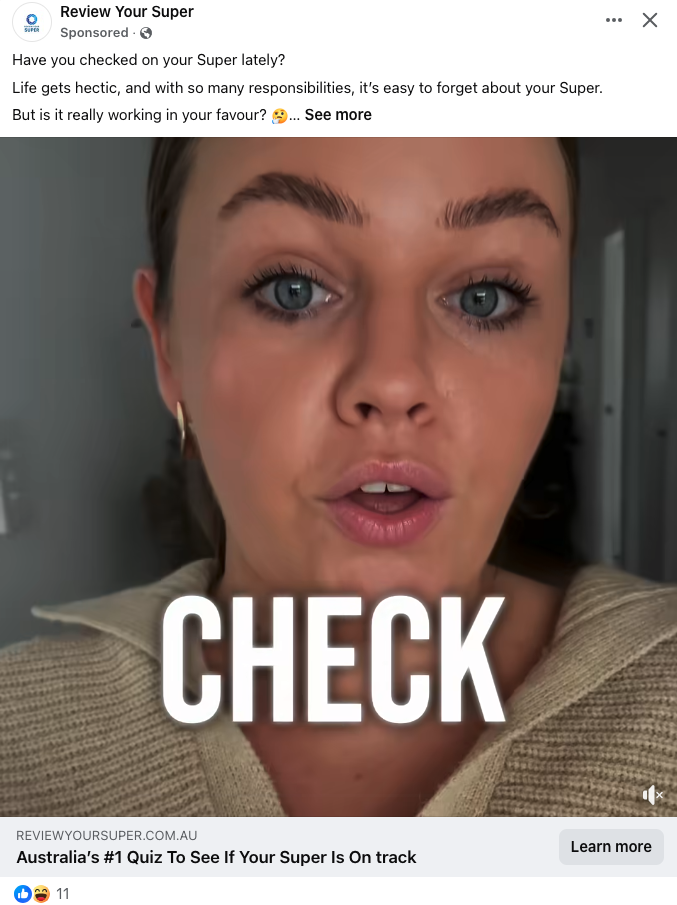
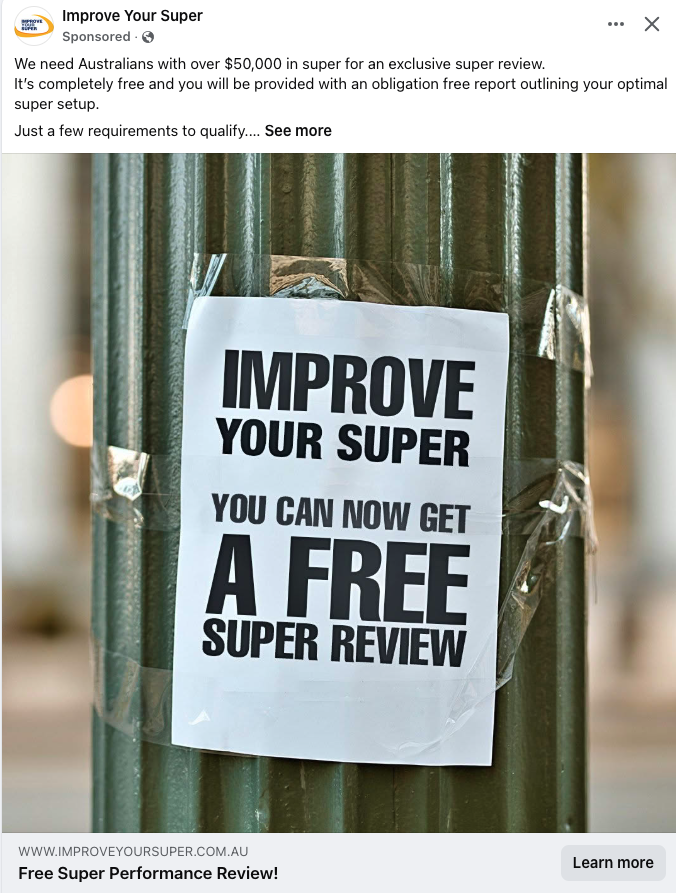
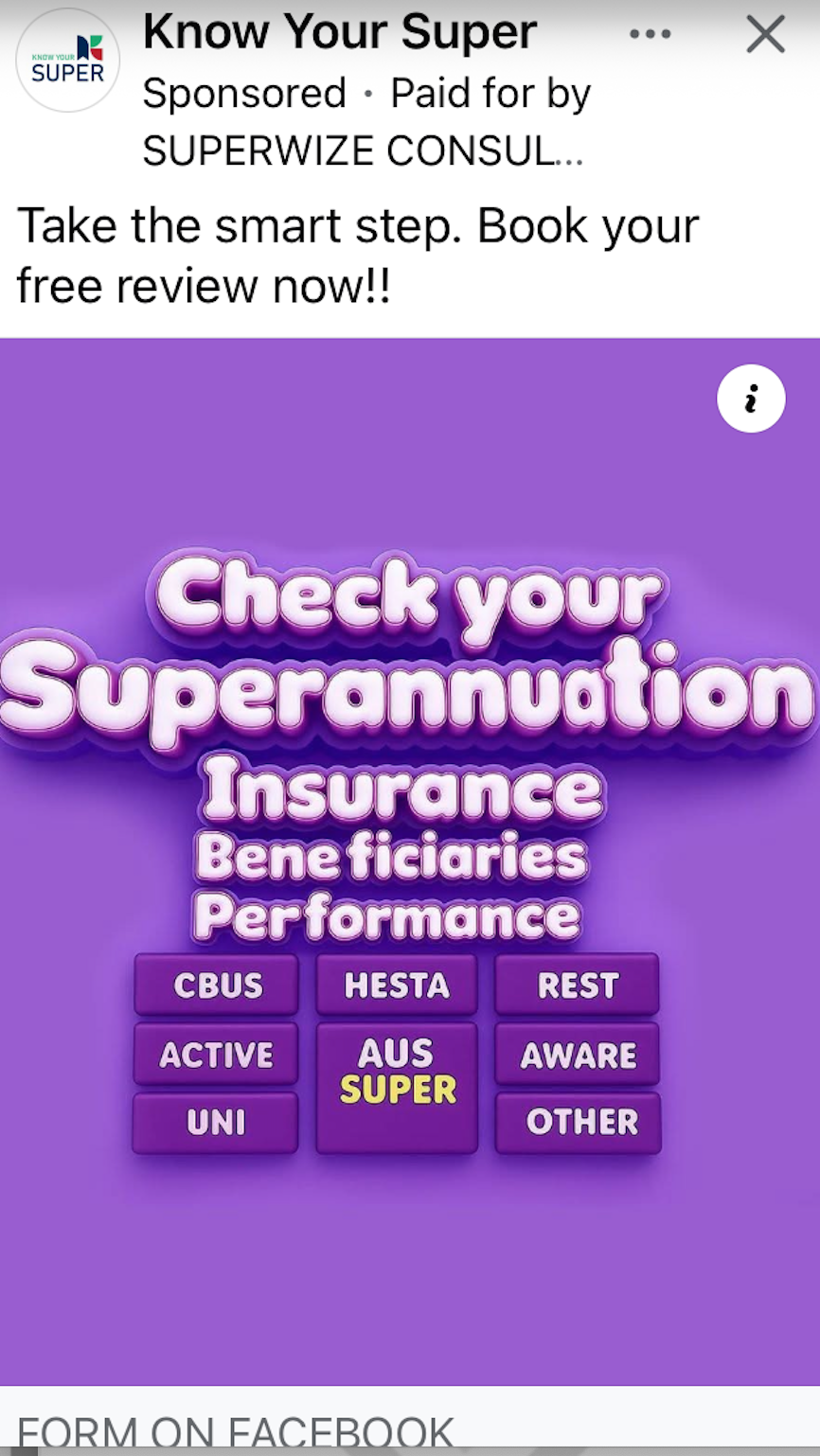
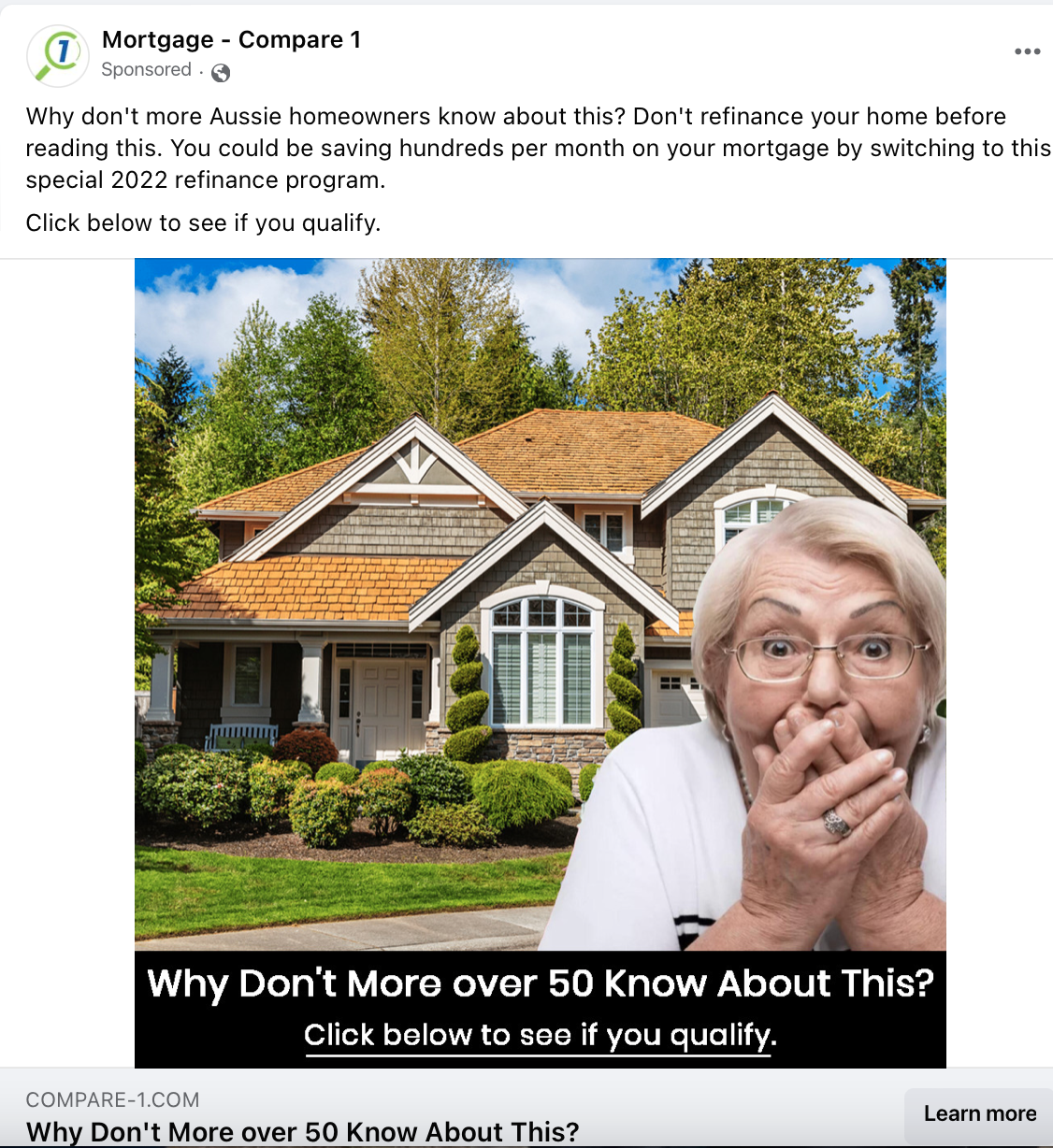
Lead generation ads on Facebook for financial services can link to scams, or ‘click bait’ promising unrealistic returns that can lead people to switch to risky investments.
Lead generation ads are placed in a bogus business name, often without disclosing the company providing the services, so it’s not possible to know which licensed financial service (if any) is benefiting from the ads.
Even if they don’t lead to a scammer, these ads can result in huge losses, such as when thousands of people lost their superannuation after responding to ‘super comparison’ lead generation ads.
New Facebook advertising rules.
While it won’t solve all the problems, it is positive that Meta (Facebook) has signed on to the Australian Online Scams Code, and has developed a new process for financial services advertising in line with the Code’s commitment to “Deploy measures to protect people from scam advertising.”
From July 2025, Meta requires financial services advertisers to verify the identification of the payer and of the beneficiary of the ad.
So you can still lose money, but at least you’ll know who’s responsible!
Rates Compare and Capital Guard
While most of the financial services ads I see on Facebook now identify the advertiser, there are exceptions. Like this one, which advertises “term deposits’. The advertiser ‘Rates Compare’ isn’t a real company, and the name of the owner of the website is hidden. My response resulted in a phone call from Capital Guard which holds an AFSL.










 The Naysayer